
Appearance
CBD Products: How to Compare Quality
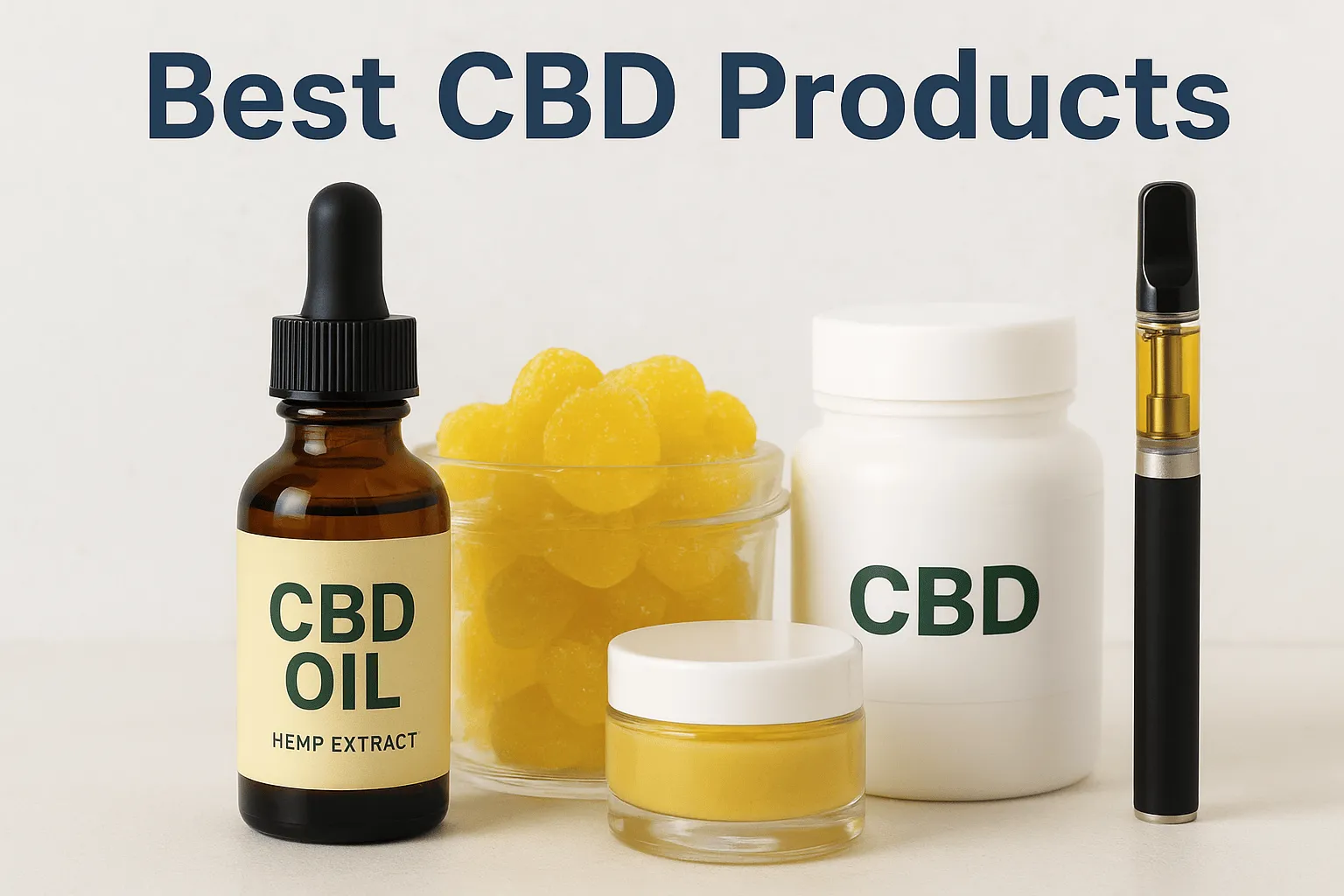
The “best” CBD product isn’t necessarily the one with the highest potency or strongest medical claims. A useful comparison starts with lawful sale, clear labeling, batch-specific testing, appropriate ingredients, and a format that can be measured. These checks can reduce uncertainty, but they don’t prove a product is safe or effective for a health condition.
Use this guide to compare CBD oils, gummies, capsules, topicals, and vapes by their labels, ingredients, and laboratory reports. It provides a quality checklist, not a ranking based on hands-on product testing.
If CBD is new to you, read What Is CBD?, CBD side effects and interactions, and the CBD dosage guide before comparing products.
CBD Product Quality Checklist
| Check | What to look for | Warning sign |
|---|---|---|
| Seller | Identifiable business, contact details, lawful sales channel | Anonymous seller or no accountable company |
| CBD label | CBD per mL, capsule, gummy, or application | Only “hemp extract” or a large package total |
| Batch identity | Lot number that matches a current COA | Generic report used for every product |
| Cannabinoids | Measured CBD and THC with detection limits | “THC-free” without supporting results |
| Contaminants | Relevant pesticide, heavy metal, solvent, and microbial panels | Potency-only report presented as a full safety test |
| Ingredients | Complete list appropriate for the route of use | Undisclosed flavors, carriers, or additives |
| Claims | Specific, cautious, and consistent with evidence | Promises to cure, prevent, or treat disease |
| Legal status | Product and seller comply where the buyer lives | “Hemp-derived means legal everywhere” |
How to Read a Certificate of Analysis
A Certificate of Analysis (COA) is most useful when it comes from an independent laboratory and matches the exact batch on the package.
- Confirm the product name, lot number, and sample date.
- Compare measured CBD with the label claim.
- Check measured THC and the laboratory's reporting limit.
- Look for contaminant panels relevant to the product and extraction method.
- Verify the laboratory identity and accreditation rather than relying on a seller's badge.
A COA reports results for the sample tested. It doesn’t establish medical benefit, guarantee that every unit is identical, or replace regulatory oversight.
Comparing CBD Product Formats
CBD Oil
CBD oil usually states total CBD, bottle volume, and sometimes CBD per milliliter. A marked dropper can make the labeled amount easier to calculate than an inhaled product.
Check the carrier oil, concentration, spectrum type, and whether the dropper has readable volume markings. Don’t assume a fixed number of drops equals one milliliter.
CBD Gummies
CBD gummies should state CBD per piece as well as the package total. Because they’re swallowed, their effects can be delayed and variable. Their candy-like appearance also creates an accidental-ingestion risk for children.
Check sweeteners, allergens, added melatonin or herbs, child-resistant packaging, and whether the batch report supports the per-piece claim.
CBD Capsules
Capsules provide a labeled amount per unit and avoid flavor, but absorption can still be delayed and variable. A fixed capsule also offers less flexibility than a measured liquid.
Check capsule ingredients, allergens, serving size, and CBD per capsule rather than only the bottle total.
CBD Topicals
Topicals are applied to the skin. Labels should distinguish total CBD from concentration and explain the intended application area. Avoid products that promise to treat systemic conditions based only on topical use.
Review fragrances, allergens, menthol, camphor, and other active ingredients separately from CBD.
CBD Vapes
CBD vape products expose the lungs to an aerosol. The container label alone doesn’t provide a reliable per-puff dose, and a clean COA doesn’t establish lung safety.
Never vape an oral oil. Avoid informal, modified, leaking, or incompletely labeled products, and review the dedicated lung and ingredient risks before considering this format.
Full-Spectrum, Broad-Spectrum, or Isolate?
- Full-spectrum products may contain THC and create greater intoxication, drug-testing, and legal risk.
- Broad-spectrum products are intended to retain multiple compounds while removing or reducing THC, but “THC-free” still needs verification.
- CBD isolate is intended to contain only CBD; purity and absence of THC still depend on accurate manufacturing and testing.
No spectrum is automatically best. Choose based on verified contents, legal requirements, and whether you need to avoid THC. The CBD vs THC guide explains the practical differences.
Potency Is Not a Quality Score
A higher milligram number doesn’t make a product better. It can increase cost and exposure without showing that the product will help. Compare concentration only after checking the label, serving size, medicines, health history, and intended use.
There’s no universal retail CBD dose by body weight or symptom. Use the CBD dosage guide to calculate what a label means and understand why online treatment-dose charts can mislead.
Red Flags When Shopping
Avoid or investigate products that have:
- No batch-specific laboratory report
- A QR code that leads only to a marketing page
- Disease-treatment or guaranteed-result claims
- CBD amounts stated only for the whole package
- No THC result or detection limit
- An incomplete ingredient list
- Reviews presented as clinical evidence
- A price or countdown designed to rush the purchase
- Claims that the product is FDA-approved when it is not the approved prescription medicine
Safety and Legal Checks
CBD can cause drowsiness, gastrointestinal symptoms, mood changes, liver injury, and drug interactions. Product testing doesn’t remove these pharmacological risks. Speak with a clinician or pharmacist if you use medicines, have liver disease, are pregnant or breastfeeding, or are considering CBD for a child.
Finished-product rules vary by location and format. Check whether CBD is legal where the product will be bought, used, or carried.
Sources
- FDA: What to know about products containing CBD
- FDA: Regulation of cannabis and cannabis-derived products
- NCCIH: Cannabis and cannabinoids overview
Use these criteria to narrow your options, then evaluate the specific product, batch, health context, and local rules rather than relying on a generic ranking.